Generates fictional names from a fixed set of 10 countries and both genders — for worksheet examples, practice datasets, and lessons on naming conventions, never from a real class roster.
Building A Week Of Worksheets Without Reusing A Real Name
A teacher preparing a week's worth of example material runs into the same small decision over and over: this sample form needs a name in the blank, this practice spreadsheet needs a column of names to sort, this roleplay card needs a persona that isn't a student sitting in the room. The fastest option is usually a real one — a name recycled from an old class list, "John Smith" typed without a second thought — which isn't careless exactly, just the path of least resistance in the moment. None of those names belong in material that might get reused, photocopied, or handed to a substitute years later.
The Random Name Generator replaces that habit with a single source: realistic but entirely fictional names, generated fresh for each need instead of borrowed from whoever's nearby. The same worksheet-example problem, the spreadsheet-practice-data problem, and the roleplay-persona problem all draw from the same tool, just with a different country or gender selected each time.
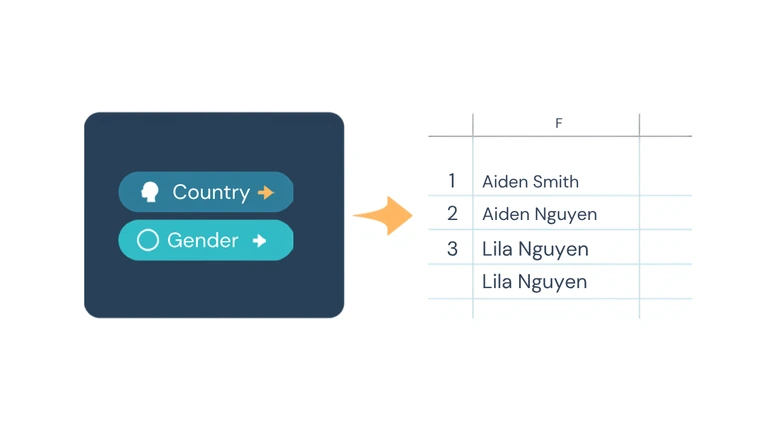
Names come from a fixed set of ten countries — Pakistan, Albania, Argentina, Germany, the United States, China, India, Russia, France, and Canada — with a male or female option for each, and each country-gender combination draws from its own separate list rather than one shared pool. That's genuinely useful range for illustrating how naming conventions differ by region, though it's worth being precise that it's these ten specifically, not exhaustive global coverage. Up to 100 names can be generated in one batch, enough for a single worksheet example or a full class-sized practice dataset in one pull. There's no file to upload and no class roster involved anywhere — the tool only ever takes a country, a gender, and a count, and returns names with no link to any real person's record.
What to Check Before Using a Batch
Fictional names generated from common name pools can still occasionally resemble a real person's name by coincidence, the same as any invented name would. It's worth a quick glance at a generated batch before it goes onto anything printed or shared, swapping out anything that happens to match someone in the building. This tool is built for producing realistic sample data, not for guaranteeing a name is unique anywhere in the world — no name generator can promise that, and it isn't what this one is for.
Not the Right Tool For
This doesn't work from a real class roster and can't pick an actual student for anything — it has no idea who's in your class. For fairly selecting a real student, a Wheel of Names is built for that. For splitting a real roster into groups, a Random Group Generator does that instead. Both work directly from your own student list; this tool deliberately doesn't.
Why Batch Size Has a Practical Ceiling
Each country-and-gender combination draws from its own separate name list, not a shared global pool — switching the country dropdown swaps in an entirely different set of possible names rather than just reshuffling the same list with a different accent. Within one batch, the tool picks unique random positions from that list rather than allowing repeats, which is also why very large batches slow down and can stall out entirely: as a batch gets close to its practical ceiling, finding a still-unused position takes longer with every additional name requested, since fewer unused spots are left to land on. Staying at or under the batch sizes the tool is actually built for avoids running into that slowdown.
How This Fits Into A Real Workflow
- Decide if regional variety actually matters for this task. A worksheet example or spreadsheet dataset usually doesn't need a specific country; a geography or ESL naming-conventions lesson does.
- Pick a country and gender. Each combination pulls from its own list, so switching the country produces a genuinely different set of names, not a cosmetic variation on the same one.
- Set a reasonable batch size. A worksheet example needs one or two names; a spreadsheet practice dataset can use a larger batch, but staying within the tool's intended range avoids the slowdown that comes with pushing close to its ceiling.
- Generate and skim the results. Check for anything that happens to resemble a real person in the building before it goes onto anything printed or shared.
- Use the names in the actual material. A worksheet field, a dataset, a discussion list, or a set of roleplay personas.
An actual batch — Germany, Female, 5 names — might come back as: Ada, Hannelore, Ingeborg, Saskia, Romy. Switch the country to India with the same settings and the list is a completely different pool, not a restyled version of the same one — something like Aditi, Kavya, Meher, Tanvi, Zoya.
Privacy
The entire point of this tool is producing names disconnected from any real student, so the responsibility runs the other way: don't substitute a real student's name into example material in the first place, which is the habit this tool exists to replace. If a worksheet or dataset ever needs to reference an actual person for a legitimate reason, use only information already appropriate to share publicly.
FAQ
Are the generated names real people?
No — they're fictional combinations drawn from name lists by country and gender, not pulled from any real person's record.
Which countries are supported?
Ten: Pakistan, Albania, Argentina, Germany, the United States, China, India, Russia, France, and Canada, each with a male or female option.
How many names can be generated at once?
Up to 100 in a single batch.
Can this pick a real student from my class?
No — it has no connection to any class roster. For picking a real student fairly, use a Wheel of Names instead.
Could a generated name accidentally match someone real?
It's possible with common names, by coincidence, the same as with any invented name. Skim a generated batch before using it on anything printed or shared.
Building In the Habit
Reaching for a real name as the quickest example is an easy habit to fall into and just as easy to drop. A batch of realistic but fictional names, ready in seconds, means a worksheet example, a practice dataset, or a roleplay persona never has to lean on whoever happens to be sitting nearby.
 This article is about
Random Name Generator for Characters and Teams
Open the tool