Practical assignment planning steps students can use to start earlier, break work into smaller parts, and avoid last-minute stress.
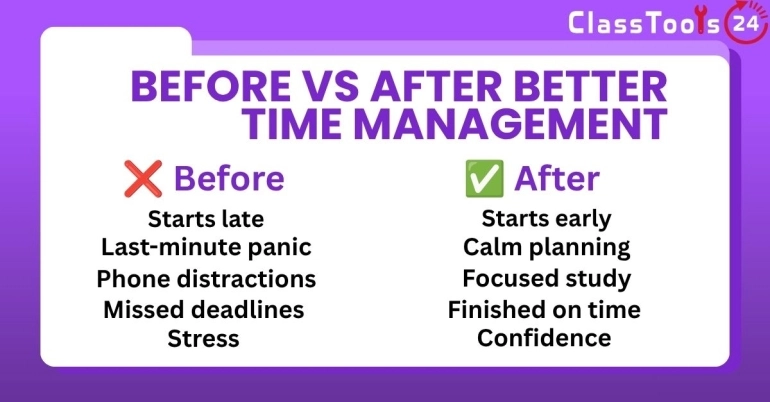
A student gets an assignment on Monday and the deadline feels far away. The instructions go into a folder, the student thinks there is plenty of time, and the week moves on. Then the deadline suddenly feels close. The assignment is bigger than expected, the research is not finished, the first draft is weak, and the final evening becomes stressful.
Cramming usually does not happen because students do not care. It often happens because assignments hide their true size. A task that sounds simple, such as “write a report,” may include reading, choosing a topic, finding sources, taking notes, planning paragraphs, drafting, editing, formatting, checking the rubric, and submitting correctly. If students only see the final due date, they miss all the smaller deadlines inside the work.
Assignment planning helps students see the whole task before panic starts. It turns one large piece of work into smaller actions that can be completed over several days. A good plan also helps students ask for help earlier, find missing materials sooner, and submit work that looks more careful.
This five-step assignment planning guide is written for students who want a practical system, not a complicated planner they will abandon after two days. It can be used for essays, presentations, research projects, posters, reports, lab write-ups, reading responses, group work, and digital submissions.
Why Assignment Planning Matters
Assignments are different from daily homework. Homework may be short and clear: solve ten questions, read two pages, define five words. Assignments often require decisions. Students may need to choose a topic, decide what evidence to use, organize information, create a final product, and explain their thinking.
Without a plan, students often spend too much time on the easiest parts and leave the hardest parts for the end. They may spend an hour choosing fonts or images before writing the main content. They may collect sources but never turn notes into paragraphs. They may start designing slides before understanding what the presentation needs to say.
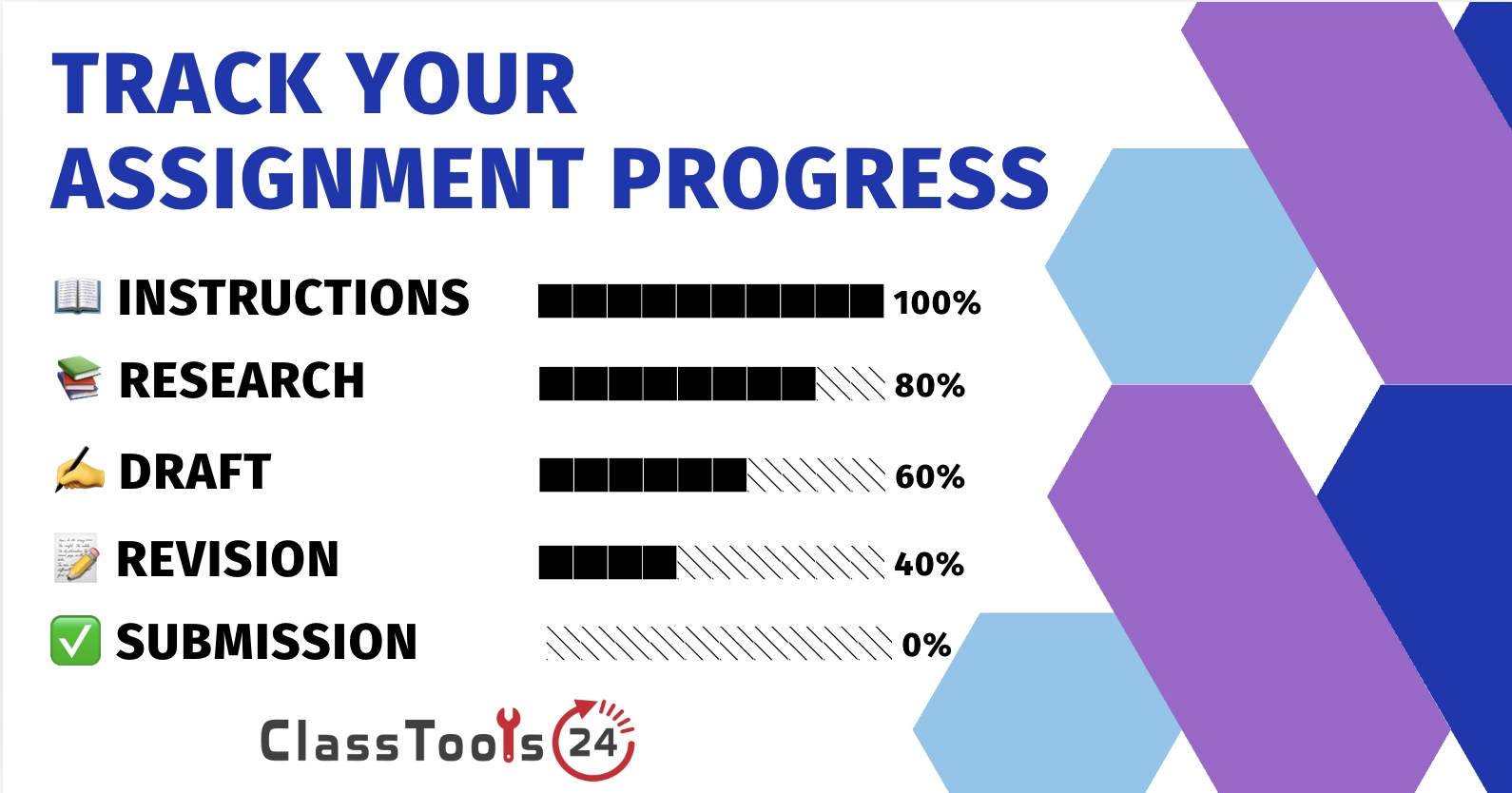
Planning keeps the work in the right order. It helps students begin with understanding, then move to gathering, organizing, drafting, improving, and submitting.
Step 1: Understand The Assignment Before Starting
The first step is to read the assignment instructions carefully. This sounds obvious, but many students lose marks because they start before they fully understand what is being asked. They may write too generally, miss a required section, use the wrong format, or forget to include evidence.
Before doing any work, answer these questions:
- What exactly do I have to create?
- When is it due?
- How long should it be?
- Do I need sources, examples, images, data, or citations?
- Is there a rubric?
- How will it be submitted?
- What parts are worth the most marks?
- What does the teacher expect to see?
If the assignment includes a rubric, read it before writing. The rubric tells you what will be judged. A student who understands the rubric can spend time on the parts that matter most.
If anything is unclear, ask early. Do not wait until the night before the deadline to ask what the teacher meant. A simple question at the beginning can save hours of confusion later.
Step 2: Break The Assignment Into Smaller Tasks
Once you understand the assignment, break it into smaller tasks. This is where many students skip ahead, but it is the step that prevents cramming.
For example, “complete history project” is not a task. It is a whole collection of tasks. A better breakdown might look like this:
- Read the assignment sheet.
- Choose a topic.
- Find three reliable sources.
- Take notes from each source.
- Write a thesis or main idea.
- Create an outline.
- Draft the introduction.
- Draft the body sections.
- Add images or examples.
- Check citations.
- Edit for clarity.
- Submit the final file.
This list makes the assignment visible. It also gives you a way to make progress even when you do not have time to finish everything at once. Completing one small task still moves the assignment forward.
Try to write tasks as actions. Use words like choose, find, read, highlight, write, revise, check, upload, or submit. Action words make the next step clearer.
Step 3: Work Backward From The Deadline
After breaking the assignment into tasks, place them on a timeline. Start with the final due date, then work backward. If the assignment is due Friday, you should not be writing the first draft late Thursday night.
A simple timeline might look like this:
- Monday: understand task and choose topic
- Tuesday: collect sources and take notes
- Wednesday: write outline and first draft
- Thursday: revise, edit, format, and check rubric
- Friday: submit before the deadline
For bigger assignments, spread the work over more days. Add buffer time. Something usually takes longer than expected. A source may be hard to understand. A file may not upload. A group member may be absent. A printer may not work. Buffer time protects you from normal problems.
If you have many assignments at once, mark the deadlines in one place. A calendar, notebook, planner, phone reminder, or simple checklist can work. The best system is the one you actually check.
Step 4: Draft Before You Decorate
One of the biggest assignment mistakes is making the work look good before the content is strong. Students may spend time choosing slide backgrounds, colors, fonts, borders, or images before writing the main points. Design matters, but it should not come before thinking.
Draft the core content first. For an essay, write the main paragraphs before adjusting formatting. For a presentation, write the key points before choosing animations. For a poster, decide the information before decorating the page. For a report, organize the sections before selecting images.
A rough draft is allowed to be messy. It is not the final version. The purpose of a draft is to get ideas onto the page so they can be improved. Waiting for perfect sentences often leads to procrastination. Write a rough version first, then fix it.
When drafting, focus on the assignment question. Ask yourself: Am I answering what was asked? Am I giving evidence? Am I explaining my thinking? Am I including the required sections?
Step 5: Revise With A Checklist
Revision is more than checking spelling. It means improving the work so it matches the task better. Students who cram often skip revision because they run out of time. Planning creates space to revise properly.
Use a checklist before submitting:
- Did I answer the assignment question?
- Did I include every required section?
- Did I use evidence, examples, or sources where needed?
- Did I explain my ideas clearly?
- Did I check the rubric?
- Did I fix spelling and grammar mistakes?
- Did I format the work correctly?
- Did I save the file with the right name?
- Did I submit it in the correct place?
Read your work once for meaning and once for small errors. If possible, take a short break before the final check. It is easier to notice mistakes after stepping away for a little while.
For digital submissions, always open the file before uploading. Make sure it is the correct version. Check that images load, text is readable, and the file format is accepted by the school platform.
How To Plan When You Have Very Little Time
Sometimes students discover the assignment late or genuinely have limited time. Planning still helps. A short plan is better than no plan.
If the deadline is tomorrow, do this:
- Read the instructions and rubric first.
- List the required sections.
- Complete the highest-value parts first.
- Use a simple structure.
- Leave at least ten minutes to check and submit.
Do not spend too much time making the assignment decorative if the content is incomplete. Teachers usually grade understanding, evidence, organization, and accuracy more heavily than colors or fonts.
Planning Group Assignments
Group assignments need extra planning because more people are involved. Do not assume everyone understands their role. At the start, agree on tasks, deadlines, and how the final work will be combined.
Each group member should know:
- What part they are responsible for
- When their part is due
- Where files or notes will be shared
- Who will check the final version
- How the group will communicate
It also helps to have one person check consistency. Group projects often look messy when every student uses different fonts, styles, or levels of detail. A final review makes the work feel like one project, not several separate pieces pasted together.
Common Assignment Planning Mistakes
A common mistake is thinking about the assignment without actually writing a plan. Thinking, “I should start soon,” is not a plan. A plan names the next task and when it will happen.
Another mistake is underestimating research. Finding useful information takes time. Reading sources takes time. Taking notes takes time. If research is rushed, the final assignment often becomes weak.
Students also forget submission details. A strong assignment can lose marks if it is late, uploaded in the wrong format, missing a file, or named incorrectly. Submission is part of the task, not an afterthought.
Finally, many students skip asking for help. If you are confused, ask early. Teachers can usually help more when there is still time to act.
A Simple Assignment Planning Routine
Here is a routine students can use whenever a new assignment is given:
- Read the instructions and highlight the required parts.
- Write the final due date.
- Break the assignment into five to ten smaller tasks.
- Put each task on a day before the deadline.
- Start with the first small action within 24 hours.
- Draft the main content before formatting or decorating.
- Use a checklist before submitting.
The most important part is starting early, even if the first action is small. Opening the document, writing the heading, choosing a topic, or reading the rubric can reduce the feeling of avoidance.
Final Thought
Students do not need a perfect planning system to stop cramming. They need a simple way to see the assignment clearly, divide it into smaller parts, and begin before the deadline feels urgent.
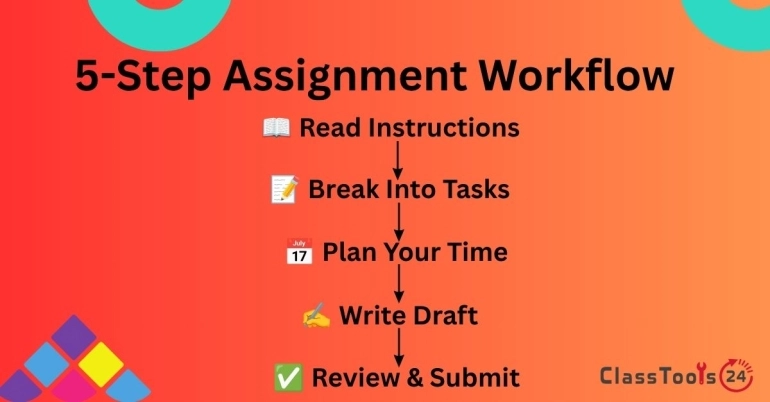
The five steps are straightforward: understand the task, break it down, work backward, draft before decorating, and revise with a checklist. Used consistently, these steps make assignments less stressful and give students more control over their work. The assignment still requires effort, but it no longer has to become a last-minute emergency.
 This article is about
Timeline Generator for Lessons, Projects and Events
Open the tool
This article is about
Timeline Generator for Lessons, Projects and Events
Open the tool