Practical time management advice for students who want to start earlier, stay focused, and finish schoolwork with less stress.
A student opens a laptop to start an assignment, checks one message, watches one short video, reorganizes the desk, looks at the clock, and suddenly an hour has disappeared. The assignment is still blank. The student feels annoyed, stressed, and maybe a little guilty, but starting now feels even harder than it did before.
Procrastination is not always laziness. Many students delay work because the task feels too large, too boring, too confusing, or too uncomfortable. Sometimes they do not know where to begin. Sometimes they are afraid the work will not be good enough. Sometimes they are tired and choose the easiest distraction in front of them. Psychological research summarized by the American Psychological Association supports this: procrastination is better understood as a way of managing difficult emotions around a task than as a simple failure of willpower or scheduling.
Good time management does not mean planning every minute of the day like a machine. Students are human. They need rest, friends, family time, hobbies, food, sleep, and space to think. The goal is not to become perfect. The goal is to create habits that make starting easier and reduce the panic that comes from leaving everything until the last moment.
These time management tips are written for real student life. They can help with homework, revision, long projects, exam preparation, online classes, reading assignments, essays, and daily routines. Some ideas are small. Some require practice. The most important thing is to choose one or two and actually use them for a week.
Why Students Procrastinate
Before fixing procrastination, it helps to understand it. Students often delay tasks that feel unclear. If the instruction says “write a report” but the student does not know the first step, the brain looks for something easier. Checking a phone gives quick comfort. The report still waits.
Students also procrastinate when the task feels too big. A ten-page reading, a science project, or an exam covering five chapters can feel impossible. When the brain sees a task as too large, it may avoid the whole thing instead of starting with a small piece.
Another reason is perfectionism. Some students delay because they want the work to be excellent, but the pressure makes starting difficult. They think, “I need a perfect opening sentence,” or “I should understand everything before I begin.” In reality, most good work starts rough and improves through revision.
Distraction is also a major reason. Phones, games, videos, group chats, music apps, and open browser tabs compete for attention. Even a student with good intentions can lose focus if the environment keeps offering easier choices.
Start With A Smaller First Step
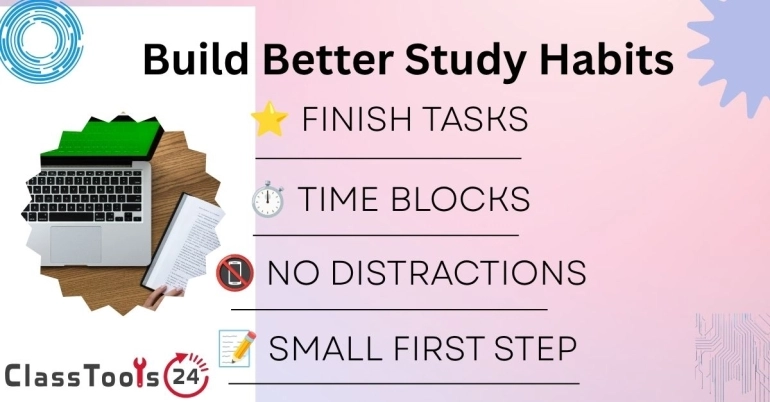
The hardest part of many tasks is starting. A useful trick is to make the first step so small that it feels almost too easy. Instead of saying, “I will finish my essay,” say, “I will open the document and write the title.” Instead of saying, “I will study science,” say, “I will read one page and underline three key words.”
Small first steps reduce resistance. Once the task has started, continuing often feels easier. The brain no longer sees a huge wall. It sees a door that is already open.
Examples of small first steps:
- Open the assignment instructions.
- Write the date and title.
- List three things you already know.
- Read the first paragraph only.
- Solve one practice question.
- Find the textbook page.
- Create the file name and save the document.
- Write one messy sentence to begin.
This method works because action creates momentum. Waiting to feel motivated can take too long. Starting small gives motivation a chance to appear after movement begins.
Use The 10-Minute Rule
When a task feels unpleasant, promise yourself only ten minutes. Set a timer, such as a Classroom Timer, and work until it rings. After ten minutes, you can choose to stop or continue.
Most students discover that ten minutes is enough to break the freeze. The task becomes less mysterious. The page is no longer blank. The problem has been started. Even if you stop after ten minutes, you have made progress that did not exist before.
The 10-minute rule is especially helpful for reading, revision, cleaning a workspace, starting an essay, reviewing notes, and organizing project materials. It removes the pressure of finishing and focuses only on beginning.
Break Big Tasks Into Visible Pieces
Large tasks need smaller parts. “Study for history test” is too vague. “Review causes of World War I, make flashcards for key terms, answer five practice questions, and check one essay plan” is clearer.
A broken-down task gives the student something specific to do. It also creates progress points. Crossing off small parts can feel encouraging and helps the brain see that the work is moving.
For example, instead of writing “finish project,” break it into:
- Read the project instructions.
- Choose the topic.
- Collect three sources.
- Write the heading and introduction.
- Create the first section.
- Add images or examples.
- Check spelling and format.
- Submit the final version.
Each step can be scheduled separately. This prevents the common problem of discovering the night before the deadline that the project had many hidden parts.
Plan Backward From The Deadline
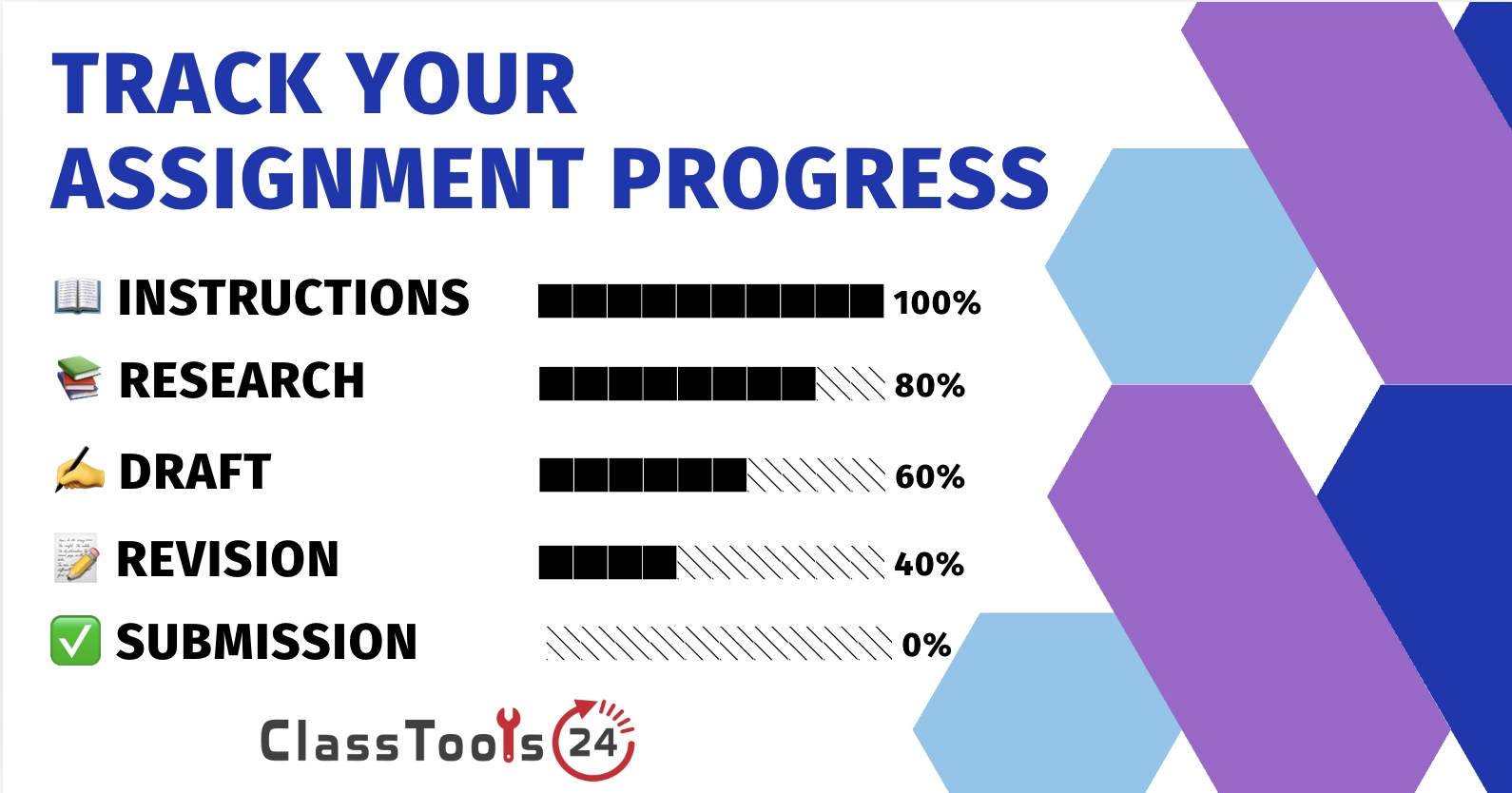
Many students only write the final due date in a planner. That is useful, but not enough. If an essay is due Friday, the student needs earlier mini-deadlines: choose topic Monday, outline Tuesday, draft Wednesday, revise Thursday, submit Friday.
Planning backward helps students avoid last-minute work. Start with the due date, then ask what must be finished before that date. Put each part on a different day if possible.
This is especially important for projects, presentations, essays, lab reports, revision weeks, and group work. Long tasks need space. If everything is left for one evening, the quality drops and stress rises.
Use A Simple Daily Priority List
A long to-do list can feel discouraging. Students may write fifteen tasks, complete two, and feel like they failed. A better method is to choose three priorities for the day.
Write:
- Must do
- Should do
- Could do
The “must do” task is the most important. It may be homework due tomorrow, a test review, or a missing assignment. The “should do” task matters but has a little more flexibility. The “could do” task is useful if time and energy remain.
This method helps students focus. Instead of trying to do everything, they protect the work that matters most.
Match The Task To Your Energy
Not all study time is equal. Some students focus better right after school. Others need a break first and work better in the evening. Some students can write when tired but cannot solve math problems. Others can revise flashcards on low energy but need high energy for essays.
Pay attention to your pattern. Put harder thinking tasks during your stronger time. Save easier tasks for lower energy. For example, if you think clearly before dinner, use that time for writing, problem-solving, or studying difficult material. Use later time for organizing notes, reviewing vocabulary, or checking formatting.
This is not an excuse to delay everything until the perfect mood arrives. It is a way to use your best focus wisely.
Create A Distraction Plan
Most students know what distracts them. The problem is not mystery. The problem is access. If the phone is beside the notebook, the phone usually wins. If a game tab is open, the game is waiting. If notifications keep appearing, attention keeps breaking.
A distraction plan removes some choices before work begins. Put the phone across the room, use focus mode, close extra tabs, log out of distracting sites, or study where other people can see you working. If music helps, choose a playlist before starting so you do not keep searching for songs.
Students do not need a perfect environment, but they do need fewer traps. Every distraction removed makes it easier to stay with the task.
Try Time Blocks Instead Of Endless Studying
“I will study all evening” sounds serious but often fails. It is too open. Without a clear start and stop, students drift, check messages, snack, reread the same paragraph, and feel tired without much progress.
Use time blocks instead. A time block has a task, a start time, and an end time — a Study Planner Generator can help lay these out for a full week instead of one evening at a time. For example:
- 4:30 to 4:50: math homework questions 1 to 8
- 5:10 to 5:30: read science pages 42 to 45
- 7:00 to 7:20: revise vocabulary cards
Short blocks are easier to begin and easier to finish. They also make breaks feel earned instead of accidental.
Use Breaks Properly
Breaks are not the enemy. Bad breaks are the problem. A good break helps the brain reset. A bad break turns into another hour of avoidance.
Good breaks are short, clear, and easy to stop. Stretch, drink water, walk around, tidy the desk, step outside, or rest your eyes. Be careful with breaks that involve endless scrolling or videos, because they are designed to keep you there.
Try a 25-minute work block followed by a five-minute break, or a 40-minute work block followed by a ten-minute break. Choose the rhythm that fits your age, task, and attention span.
Prepare Tomorrow Before You Stop Today
One powerful time management habit is ending each study session by preparing the next one. Before closing the book, write the next step. For example: “Tomorrow, start with paragraph three,” or “Next, solve questions 6 to 10,” or “Review the water cycle diagram.”
This removes the starting problem the next day. You do not waste ten minutes asking, “Where was I?” The work is ready to continue.
This habit is especially helpful for essays, long readings, revision notes, and projects that last several days.
Make Homework Easier To Start
If homework begins with searching for supplies, finding passwords, charging a laptop, and clearing a desk, students may lose energy before the work begins. Make starting easier by setting up a basic homework routine.
Keep common supplies in one place. Charge devices before study time. Put textbooks back in the same spot. Use one notebook or folder for current assignments. If you work digitally, organize files by subject and date.
Organization is not about being neat for appearance. It saves starting energy. The easier it is to begin, the less likely procrastination becomes.
Use Accountability Without Shame
Some students work better when someone else knows the plan. Tell a friend, parent, sibling, or classmate what you are going to do and when. For example: “I am going to finish the first draft by 6:30.”
Accountability should not feel like punishment. It is a support. A study partner can check in. A parent can help protect quiet time. A friend can work beside you silently. Even sending a message after finishing can create a small sense of commitment.
Learn The Difference Between Urgent And Important
Procrastination often makes everything urgent. When students wait too long, homework, revision, projects, and corrections all become emergencies. Time management means noticing important tasks before they become urgent.
Important tasks include studying before the night before the test, starting projects early, asking for help while there is still time, and reviewing feedback before the next assignment. These tasks may not feel urgent today, but they prevent stress later.
A simple question can help: “Will future me be glad if I do this today?” If the answer is yes, the task probably deserves time.
Do The Hardest Small Piece First
Some students spend all their energy on easy tasks and avoid the difficult one until late at night. It can help to do the hardest small piece first. Not the whole hard task, just the first serious part.
For an essay, write the rough introduction or outline. For math, solve the first difficult problem. For science, review the concept you understand least. Once the hardest piece is touched, the rest of the session feels less heavy.
This method builds confidence because the avoided task is no longer untouched.
What To Do After You Procrastinate
Everyone procrastinates sometimes. The important thing is how you respond. Shame wastes more time. Instead of saying, “I ruined everything,” ask, “What is the next useful step?”
If you lost an hour, start with ten minutes. If the deadline is close, choose the most important parts first. If you are confused, ask for help or review the instructions. If the task is too large, break it down immediately.
Procrastination becomes worse when students give up because they already delayed. Progress is still possible after a slow start.
A Simple Anti-Procrastination Routine
- Write the exact task.
- Choose the smallest first step.
- Set a timer for ten minutes.
- Remove one major distraction.
- Work until the timer ends.
- Take a short break.
- Decide the next step before stopping.
This routine is simple enough to use on school nights. It does not require a perfect planner or complicated system. It only asks students to begin, focus briefly, and keep moving.
Final Thought
Stopping procrastination is not about suddenly becoming a completely different person. It is about building small habits that make work easier to start and easier to continue. A student who begins ten minutes earlier, breaks tasks into pieces, removes one distraction, and plans the next step is already improving.
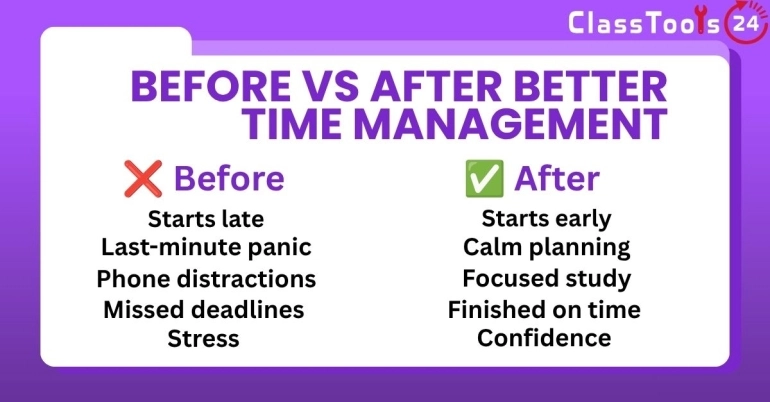
Time management works best when it is realistic. Students will still have busy days, tired days, and distracting days. But with clear first steps, short work blocks, better breaks, and earlier planning, schoolwork becomes less stressful and more manageable. The goal is not perfect productivity. The goal is steady progress before panic takes over.
 This article is about
Timeline Generator for Lessons, Projects and Events
Open the tool
This article is about
Timeline Generator for Lessons, Projects and Events
Open the tool