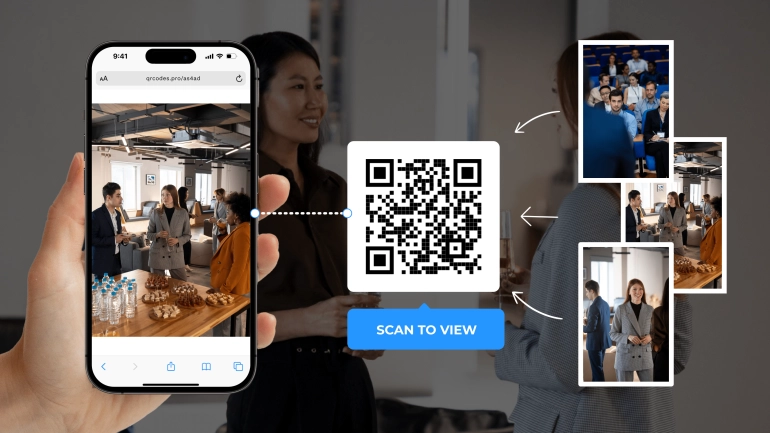
Create QR codes for classroom links, assignments, forms, and shared resources in seconds without signup.
Introduction
Sharing digital content should be quick, but in many real situations it becomes more difficult than expected. In classrooms, teachers often need students to open a worksheet, a quiz, a video, or a Google Form during the lesson. The usual method is to write a long link on the board or send it through a class group, then wait while students type it in manually. Some type it incorrectly, some open the wrong page, and some lose time asking for the link again. A small access problem can interrupt the pace of the whole lesson. Instead of moving directly into the activity, the class spends valuable time dealing with avoidable technical issues.
Students face the same challenge when they want to share their own work. A project link, survey form, research source, or digital presentation may be easy to copy and paste, but not always easy to present clearly. Long URLs can look messy in assignments, posters, and handouts. They are also difficult to read and even harder to type accurately. This often turns a simple task into an awkward one. When the goal is to make information easy to reach, forcing someone to type a long web address creates extra friction rather than solving the problem.
This is exactly where QR codes become useful. A QR code turns a link or a piece of text into a scannable shortcut that opens instantly on a phone or tablet. Instead of typing, users simply scan and continue. That one change makes classroom sharing smoother, assignment submission cleaner, and communication more efficient. It helps teachers keep lessons organized, helps students present work more professionally, and helps schools and teams connect printed materials with digital content in a practical way.
This QR Code Generator is built to make that process simple. You can create a QR code in seconds, download it immediately, and use it in worksheets, presentations, school posters, homework sheets, event notices, study guides, and business materials. There is no signup, no software to install, and no complicated setup. Whether you are sharing a classroom link, a form, a school announcement, or a project resource, the tool gives you a fast and reliable way to connect people to the right content.
What This Tool Does
This tool converts your input into a scannable QR code. The input can be a website link, a document URL, an online form, a classroom resource, or plain text. Once the QR code is generated, anyone with a smartphone camera or QR scanning app can scan it and reach that content instantly. That removes the need to type long URLs manually and lowers the risk of access errors. The result is a faster and more user-friendly way to share information across both digital and printed materials.
The generated QR code is high quality and easy to use in different formats. You can place it inside a worksheet, presentation slide, classroom handout, school notice, digital assignment, poster, menu, flyer, or business card. Because the code is designed to scan clearly across modern devices, it works well whether it is displayed on a screen or printed on paper. That flexibility is one of its strongest practical benefits. A single QR code can turn a static page into something interactive and much more useful.
The tool also supports simple customization, which makes the output easier to match different needs. For example, if you want a larger code for a classroom wall poster or an event display, you can generate it accordingly. If you want the QR image to fit neatly into a document, worksheet, or printed task card, you can create and download it quickly without needing separate design software. This helps teachers, students, and everyday users prepare cleaner, more organized materials in less time.
Another important benefit is ease of use. You do not need technical knowledge to create a working QR code. The process is simple, fast, and browser-based. This matters for classrooms and busy work environments where people want something that works immediately. If needed, this tool can also fit into a wider workflow. For example, you might link a QR code to a document created with /word-to-pdf/, or to an image optimized through /image-compressor/. If you later need to read an existing code, /qr-code-decoder/ can help you extract the content quickly. For group-based classroom tasks, you can also combine it with /random-group-generator/ to organize activities more efficiently.
How to Use
Start by deciding what you want the QR code to open. In most cases, this will be a link. It could be a Google Form for attendance, a shared document for homework, a presentation for class discussion, a YouTube video for revision, or a website page with extra reading. You can also use plain text if you want to display specific information directly. Before generating the code, check that your content is correct. If the link is broken or the text has an error, the QR code will still generate, but it will lead users to the wrong result.
After entering the content, generate the QR code. The tool processes the input immediately and shows the result on screen. At this stage, it is a good idea to scan the code once before downloading it, especially if it will be used in something important like an assignment sheet, event poster, or classroom task card. A quick test helps confirm that the QR code opens the exact resource you intended. That small step can prevent confusion later, particularly when many users will rely on the same code.
Once everything looks correct, download the QR code and place it where you need it. Teachers can add it to slides, worksheets, printed station cards, revision guides, or classroom displays. Students can include it in project submissions, reports, presentations, and study materials. Schools can use it in event notices, registration sheets, and parent communication. Businesses and teams can use it in forms, product pages, or internal documents. The goal is always the same: reduce friction and make the path to information as direct as possible.
If your QR code connects to a resource file, it often helps to prepare that file properly first. For example, if the linked file is a large image, it may load faster after optimization through /image-compressor/. If the linked file is a document, converting it through /word-to-pdf/ can make sharing easier across devices. If you are working with printed or scanned materials and want to confirm what a QR code contains, /qr-code-decoder/ can help. And if you are running a classroom station activity where groups rotate between tasks, using /random-group-generator/ together with QR-based task cards can make the entire process more organized.
Use Cases
1. Classroom Resource Sharing: A teacher wants students to open a reading passage, quiz, or video quickly during class. Instead of writing a long URL on the board, the teacher places a QR code on the slide or worksheet. Students scan it and reach the resource in seconds. This reduces interruptions, avoids typing mistakes, and helps the lesson move smoothly. It is especially useful when time matters and the teacher wants to keep students focused on the actual activity instead of technical access problems.
2. Homework and Assignment Submission: Students often need to submit digital work or access online instructions for homework. A QR code can link directly to the submission form, file folder, or assignment page. Teachers can place the code on printed homework sheets, classroom boards, or announcements so students always know where to go. This makes the process cleaner and more consistent. It also helps students avoid losing links in chat threads or messages, because the access point stays visible and easy to scan.
3. Interactive Learning Stations: In station-based lessons, each activity point can include its own QR code. One code may open a short explanation video, another a worksheet, another a form, and another a challenge task. Students move around the room and scan each station’s code to begin. This keeps the room organized, reduces repeated instructions, and gives students fast access to the correct material. Combined with /random-group-generator/, teachers can also assign rotating groups in a quick and structured way.
4. Study Notes and Shared Revision Materials: Students frequently exchange notes, digital flashcards, review documents, and revision links. Instead of sharing multiple messy URLs, they can create QR codes for each resource and attach them to printed notes or slides. This makes revision packs cleaner and easier to navigate. A classmate can scan a code and open the exact file, guide, or resource immediately. For collaborative learning, this is far more practical than rewriting long links by hand or searching through old messages.
5. Forms, Feedback, and Attendance: QR codes work well for attendance forms, exit tickets, polls, and classroom feedback. A teacher can display one code at the front of the room, and students scan it to respond. This saves setup time and makes response collection easier. It is also useful at school events, workshops, or meetings where many people need to access the same form quickly. Instead of repeating the link aloud or printing it in full, one visible QR code can handle the entire process.
6. School Events and Announcements: Schools can use QR codes on posters, notice boards, event banners, and printed letters to direct students and parents to schedules, registrations, maps, or updates. This helps printed communication stay short while still linking to full digital information. If a school is running a science fair, parent meeting, or special program, QR codes can make event details easier to access and easier to update. They also give posters and notices a cleaner, more modern look.
Real-World Example
Imagine a teacher preparing an exam revision lesson for a large class. The teacher wants students to review three topics using different formats: a short video, a set of practice questions, and an online self-check quiz. In a traditional setup, the teacher would either print multiple links or write them on the board and repeat instructions several times. That often leads to delays. Some students type the links incorrectly, some reach the wrong resource, and some ask again where they are supposed to go. The lesson begins with confusion instead of focus.
Now imagine the same lesson using QR codes. The teacher places one QR code next to each topic section on the revision sheet. Students scan the first code and watch the explanation video, then move to the second code for practice questions, and finally scan the third code for the quiz. The access process is immediate. The teacher no longer needs to manage repeated link-sharing problems, and students move through the lesson with more independence. The class becomes more efficient, more organized, and less stressful for everyone involved.
Consider another example involving a student presentation. A student is preparing a research project and wants to include online references, a supporting article, and a short survey response form. Instead of pasting long links into the slides or printed report, the student generates separate QR codes and places them neatly inside the project. When the teacher or classmates review the work, they can scan the code and open the linked material instantly. This improves the appearance of the project and makes the supporting resources easier to access. It also shows thoughtful digital organization, which strengthens the overall presentation.
These examples show why a QR Code Generator is not just a novelty tool. It solves a real access problem that appears repeatedly in classrooms, assignments, group work, events, and everyday communication. It helps printed materials become interactive, helps digital resources become easier to reach, and helps users save time in situations where speed and clarity matter. That is why it is so useful across both education and general productivity workflows.
How This QR Code Generator Compares to Other Tools
There are many QR code generators available online, but not all of them are built with real user needs in mind. Some tools require account creation, limit features behind paywalls, or slow down the process with unnecessary steps and ads. This tool is designed to be simple, fast, and fully accessible, especially for students, teachers, and everyday users who need reliable results without complications.
| Feature | ClassTools24 QR Generator | Typical Online QR Tools |
|---|---|---|
| Free to Use | 100% free with no hidden limits | Often limited or require payment |
| No Signup Required | Instant use without account | Account required in many cases |
| Speed | Generates QR codes instantly | Slower due to ads or extra processing |
| Ease of Use | Simple and clean interface | Often cluttered and harder to use |
| Customization | Easy control of size and color | Limited or locked behind upgrades |
| Privacy | No data stored | Some tools track or store data |
| Education Focus | Designed for classrooms and assignments | General-purpose tools only |
| Device Compatibility | Works smoothly on mobile and desktop | Not always fully optimized |
This comparison highlights the practical differences users experience. While many tools offer QR code generation, they often introduce limitations that slow down the process. This tool focuses on delivering a straightforward experience with fast performance, full accessibility, and no barriers, making it a reliable option for both educational and everyday use.
FAQs
What is a QR Code Generator?
A QR Code Generator is a tool that turns a link, text, or other input into a scannable QR code that users can open with a phone camera.
Can I use this QR code tool for classroom links and assignments?
Yes. It is especially useful for sharing worksheets, quizzes, forms, lesson resources, and assignment links in a faster and cleaner way.
Do I need to sign up before using this tool?
No. The tool works instantly in your browser and does not require signup or software installation.
Can I print the QR code on worksheets or posters?
Yes. The generated QR code can be downloaded and used in printed or digital materials, including worksheets, posters, documents, and slides.
Do QR codes expire?
No. The QR code itself does not expire. It will keep working as long as the link or content behind it remains available.
Can I scan an existing QR code too?
Yes. If you need to read an existing QR code, you can use /qr-code-decoder/ to extract the content quickly.