Practical icebreaker ideas teachers can use to help students speak, laugh, listen, and settle into a classroom community.
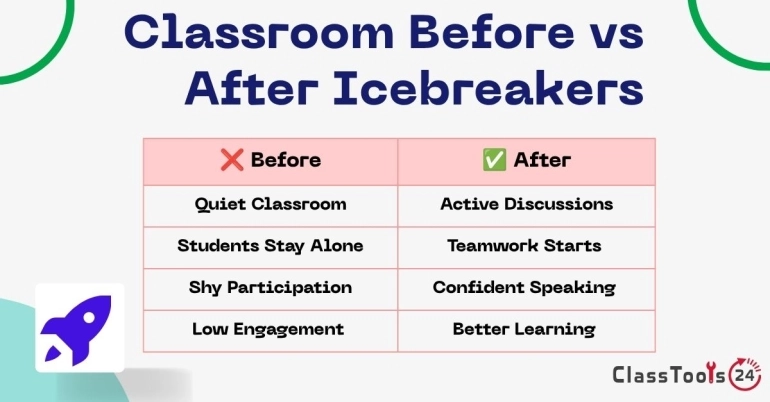
The first few minutes of a new class can feel longer than the whole lesson. Students walk in quietly, choose seats beside familiar friends, avoid eye contact, and wait for the teacher to begin. A few confident learners may speak right away, but many students need a small bridge before they are ready to talk, ask questions, or work with someone new.
That is where classroom icebreakers help. A good icebreaker is not just a random game. It gives students a low-pressure way to speak, notice each other, and feel that the room is safe enough for learning. When used well, icebreakers can reduce awkward silence, support shy students, and help teachers read the mood of the class before heavier work begins.
The best classroom icebreaker activities are simple, clear, and flexible. They do not embarrass students. They do not require expensive materials. They can be adapted for younger learners, older students, language learners, online classes, clubs, tutoring groups, or project teams. A strong activity makes students feel included without forcing them to share anything too personal.
Below are 50 practical classroom icebreaker activities teachers can use during the first week of school, after holidays, before group projects, during advisory periods, or whenever a class needs a reset. Some are quick name games. Some build discussion. Some support movement. Some work well for writing, creative thinking, or team building. Choose the ones that fit your students, time, and classroom culture.
How To Choose The Right Icebreaker
Before choosing an activity, think about the students in front of you. A group of new sixth graders needs something different from a senior class that already knows each other. A quiet morning class may need a gentle starter. A lively class after lunch may need a structured task that channels energy into listening and cooperation.
Good icebreakers usually have three qualities. First, the instructions are easy to understand. Second, the risk level is low. Third, every student has a way to participate. If an activity depends only on speaking loudly in front of the class, some learners may shut down. If it allows writing, drawing, choosing, pointing, or working with a partner first, more students can join comfortably.
50 Classroom Icebreaker Activities
1. Name And Motion
Each student says their name and adds a simple motion, such as a wave, clap, or thumbs-up. The class repeats the name and motion together. It helps students remember names through movement and sound.
2. Two True Things And One Classroom Goal
Instead of the usual two truths and a lie, ask students to share two true facts and one learning goal. This keeps the activity positive and gives the teacher useful information about student expectations.
3. Find Someone Who
Create a short checklist with prompts such as likes drawing, has read a book this month, enjoys science, or speaks more than one language. Students walk around and find classmates who match each statement.
4. Desk Name Tent
Students fold paper into a name tent and decorate it with three small symbols about themselves. They can include a hobby, favorite subject, or something they want to learn. This works well for students who are not ready to speak much yet.
5. The Common Ground Circle
Students stand or sit in a circle. The teacher reads statements such as I enjoy music, I like working in groups, or I prefer quiet study. Students step forward or raise a hand if the statement fits them.
6. One Word Check-In
Ask students to describe how they feel today using one word. They can say it aloud, write it on a sticky note, or submit it digitally. This gives the teacher a quick emotional temperature check.
7. Classroom Scavenger Hunt
Students find important classroom items: pencil sharpener, turn-in tray, emergency exit, class rules, dictionary, or help station. It teaches routines while giving students a reason to move and talk.
8. Partner Interview
Students interview a partner using three prepared questions, then introduce that partner to another pair. This is easier than introducing themselves directly to the whole class.
9. Would You Rather Corners
Label corners of the room with choices. Ask light questions such as Would you rather read outside or inside? Students move to a corner and briefly explain their choice to someone nearby.
10. Birthday Line-Up
Students line up by birthday month and day without speaking, using gestures only. It creates laughter, movement, and teamwork without requiring personal sharing beyond a date.
11. Class Playlist
Each student suggests one school-appropriate song that helps them focus or feel energized. The class builds a playlist for independent work days or celebration moments.
12. Three Objects
Show three classroom objects and ask students to choose one that represents how they learn. For example, a pencil for writing, a ruler for structure, or a sticky note for reminders.
13. This Or That
Give quick choices: books or videos, group work or solo work, morning or afternoon, writing or drawing. Students answer by moving, raising cards, or showing fingers.
14. Human Bingo
Create a bingo sheet with student-friendly prompts. Students collect names from classmates who match each square. Keep prompts inclusive and avoid sensitive topics.
15. Silent Sort
Ask students to sort themselves by height, birthday month, shoe color, or number of letters in their name without talking. It encourages observation and nonverbal cooperation.
16. Question Ball
Write simple questions on a soft ball. Students toss it gently. Whoever catches it answers the question closest to their thumb. Use easy prompts at first.
17. Classroom Map
Draw a simple map on the board with zones such as reading, sports, music, art, coding, nature, and games. Students place sticky notes where they feel they belong.
18. My Learning Superpower
Students name one strength they bring to learning, such as listening, organizing, explaining, drawing, asking questions, or helping others. It sets a positive tone.
19. Paper Chain Connections
Each student writes one interest or strength on a paper strip. Link the strips into a chain and display it. It visually shows that the class is connected.
20. Four Corners Opinion
Use signs for strongly agree, agree, disagree, and not sure. Read low-risk statements about learning preferences. Students move and discuss with classmates in the same corner.
21. Group Puzzle Challenge
Give each group a small puzzle, word scramble, or picture cut into pieces. They must complete it together. This shows how students communicate and solve problems.
22. Classroom Agreement Cards
Students write one behavior that helps them learn and one behavior that makes learning harder. Use their ideas to build class expectations.
23. Favorite Mistake
Students share a harmless mistake that taught them something, such as learning a sport, cooking, drawing, or using a device. It helps normalize mistakes in learning.
24. Mystery Classmate
Students write three clues about themselves. The teacher reads clues aloud and classmates guess who wrote them. Keep clues positive and optional.
25. Speed Friending
Students sit in two lines facing each other. They answer one question with a partner for one minute, then rotate. This works well when questions are prepared and simple.
26. Team Tower
Groups build the tallest tower possible using paper, tape, or index cards. Afterward, ask what helped the group work well and what made it difficult.
27. One-Minute Drawing
Students draw something that represents them in one minute. The fast time limit removes pressure to make perfect art.
28. Shared Story
The teacher starts a story with one sentence. Each student adds one sentence. The result is often funny and shows students that everyone can contribute.
29. Classroom Emoji Check
Students choose an emoji that matches their mood, study style, or goal for the day. They can draw it on paper or select from printed cards.
30. The Name Web
Students pass yarn across the circle after saying a name and one interest. By the end, the yarn forms a web that represents class connection.
31. Learning Preference Cards
Give cards such as I like examples, I like quiet time, I like drawing, I like step-by-step help, or I like working with a partner. Students choose one and explain why.
32. Classmate Compliment Starter
After a short partner task, students give one specific compliment about how their partner worked. This teaches respectful feedback from the start.
33. Quick Poll Wall
Post a question and let students vote with sticky notes. Ask questions like What helps you focus? or What should a good classroom feel like?
34. Find The Match
Give students cards that match in pairs, such as vocabulary word and definition, image and label, or quote and speaker. They find their partner and introduce themselves.
35. Class Logo Design
Small groups design a logo for the class using symbols that represent teamwork, learning, respect, and curiosity.
36. Teach Me Something Small
Each student teaches a partner one tiny skill or fact in one minute. It may be a study tip, shortcut, word, drawing trick, or memory method.
37. The Helpful Question Board
Students anonymously write questions they have about the class. The teacher answers them. This reduces uncertainty and helps quieter students speak through writing.
38. Classroom Values Ranking
Students rank values such as respect, effort, kindness, honesty, creativity, and responsibility. Then groups discuss which three matter most for a good learning space.
39. Object Introduction
Students choose an object from their bag or the classroom and explain how it connects to them. Students who do not want to share personal items can use classroom objects.
40. Mini Debate
Use light topics such as pencil or pen, books or tablets, homework in morning or evening. Students choose sides and give one reason.
41. Study Habit Swap
Students share one habit that helps them study or stay organized. The class collects practical tips from real students.
42. Class Memory Game
Each student says their name and one favorite thing. The next student repeats previous names and adds their own. Use small groups for larger classes.
43. Postcard To Future Me
Students write a short note to themselves about what they hope to learn or improve. Return the notes later in the term.
44. Group Role Cards
Give students roles such as reader, timekeeper, encourager, recorder, and reporter. Use a small task so they practice group roles early.
45. The Question Jar
Place safe questions in a jar. Students pick one and answer with a partner. Keep prompts simple: favorite rainy day activity, best school supply, or skill they want to learn.
46. Guess The Sound
Play short classroom-related sounds or describe sounds verbally. Students guess and discuss. It is useful for younger learners and language practice.
47. Class Timeline
Students add one important event from their school life or learning journey to a shared timeline. This can connect well with history, writing, or advisory lessons.
48. Team Name And Motto
Groups create a team name and motto for the week. This helps when students will work in teams for projects or learning stations.
49. What Helps Me Learn
Students complete the sentence: I learn best when... Answers can be collected anonymously. Teachers can use the responses to adjust routines and supports.
50. Exit Ticket Icebreaker
At the end of class, students answer one connection question: Who did you learn something about today? What is one thing you want classmates to know about you? What helped you feel comfortable?
How Icebreakers Help Classroom Learning
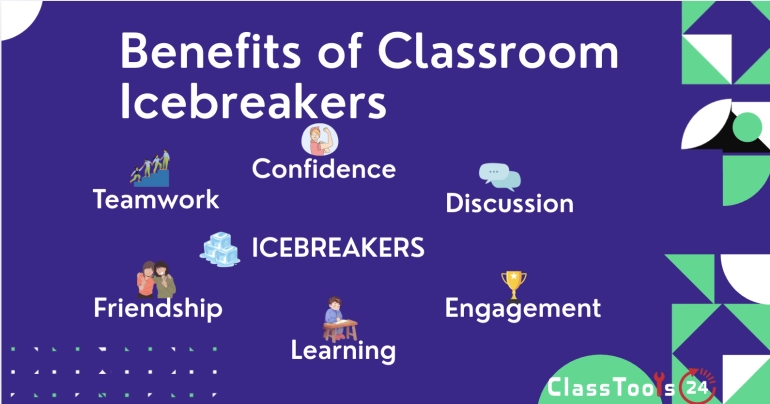
Icebreakers are often treated as extra activities, but they can support real learning conditions. Students participate more when they know names. They ask for help more easily when they have already spoken to classmates. They take group tasks more seriously when they understand how to listen, take turns, and include quieter voices.
For teachers, icebreakers offer useful observation time. You can notice who leads quickly, who waits, who needs clearer directions, who is comfortable moving around, and who may need a gentler entry point. These observations can guide seating, grouping, and support decisions later. For more foundational classroom-management habits, see 10 essential classroom tips for educators.
Common Mistakes To Avoid
The biggest mistake is choosing an icebreaker that is too personal too early. Students should not be pushed to reveal private family details, fears, finances, health information, or anything that could make them feel exposed. Keep early prompts light and classroom-safe.
Another mistake is letting the activity run too long. A five-minute icebreaker can become twenty minutes if the teacher does not set a clear time limit. Keep the purpose simple: build comfort, practice communication, or introduce a routine. Then connect the activity back to the lesson.
Finally, avoid activities where only confident students shine. Balance speaking activities with writing, drawing, movement, and partner discussion. A classroom community grows better when different kinds of students can participate in different ways.
Simple Teacher Workflow
- Choose one purpose: names, comfort, teamwork, discussion, or routines.
- Select an activity that matches the age and confidence level of the class.
- Prepare materials before students enter.
- Model the first answer yourself.
- Set a short time limit.
- Debrief with one question about what students noticed.
- Use what you learned to plan groups, seating, future activities, or a five-minute morning meeting that keeps the same routine going the next day.
Final Thought
Classroom icebreakers work best when they feel natural, respectful, and connected to the learning environment. They do not need to be loud or complicated. A thoughtful question, a small movement task, a partner interview, or a shared class display can make students feel seen without putting them on the spot.
The goal is not to make every student instantly outgoing. The goal is to make the room feel less awkward and more human. When students know names, understand routines, and feel that participation is possible, the rest of the lesson has a better chance to succeed.
 This article is about
Virtual Dice Roller for Classroom Games and Activities
Open the tool
This article is about
Virtual Dice Roller for Classroom Games and Activities
Open the tool