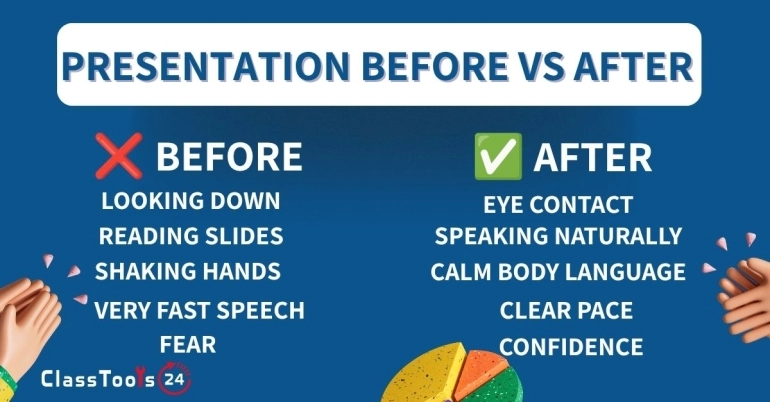
Practical presentation advice for students who feel nervous speaking in front of classmates, teachers, or small groups.
A student may understand the topic perfectly but still feel their stomach drop when the teacher says, “You will present this to the class.” The slides may be ready. The research may be complete. The student may have practised at home. But standing in front of classmates can make the voice shake, hands sweat, and thoughts disappear.
Nervousness during public speaking is very common. Many students worry about forgetting words, being judged, mispronouncing something, looking awkward, or hearing classmates laugh. Some students are confident in writing but freeze when they have to speak. Others can talk easily with friends but feel uncomfortable when all eyes are on them.
Presentation skills are not a talent that only outgoing students have. They are learned habits. Students can improve by preparing in the right way, organizing ideas clearly, practising aloud, using notes wisely, and learning how to handle nerves before and during the presentation.
This guide is for nervous students who want realistic help. The goal is not to become a perfect speaker overnight. The goal is to speak clearly enough, stay organized, and get through the presentation with more control and less panic.
Why Presentations Feel So Difficult
Presentations combine several pressures at once. Students have to remember information, speak loudly, stand in front of people, use slides or visual materials, manage time, and respond to the room. That is a lot to ask, especially for students who are shy, anxious, new to the language, or worried about making mistakes.
The brain can treat public speaking like a threat. Heart rate increases. Breathing becomes shallow. Hands may shake. The student may feel hot, cold, dizzy, or blank. These reactions are uncomfortable, but they do not mean the student is failing. They are normal body responses to pressure.
The way to improve is not to wait until fear disappears. Fear may still be there. The skill is learning what to do even while feeling nervous.
Start With A Clear Message
A presentation becomes easier when the student knows the main message. Before making slides or writing note cards, answer one question: What should the audience understand by the end?
If the topic is climate change, the message might be: “Small changes in energy use can reduce carbon emissions.” If the topic is a novel, the message might be: “The main character becomes more honest after facing consequences.” If the topic is a science experiment, the message might be: “Changing the amount of light affected plant growth.”
A clear message helps students decide what to include and what to leave out. Without a clear message, the presentation can become a list of facts with no direction.
Use A Simple Structure
Nervous students need structure because structure acts like a map. If the student forgets one sentence, they can still return to the next section. A simple presentation structure usually includes:
- Opening: introduce the topic and main message.
- Point one: explain the first important idea.
- Point two: explain the second important idea.
- Point three: explain the third important idea.
- Closing: summarize the message and finish clearly.
For shorter presentations, two main points may be enough. For longer ones, three or four points usually work better than many small sections. Too many points make the presentation harder to remember and harder for the audience to follow.
Write Speaker Notes, Not A Full Script
Many nervous students write a full script because it feels safer. The problem is that scripts can create more panic. If the student forgets one sentence, they may feel lost. Reading a script word for word can also make the voice sound flat and reduce eye contact.
Speaker notes are usually better. Write keywords, short phrases, examples, and transition words. Notes should remind the student what to say, not contain every word.
Example note card:
- Intro: why sleep matters for students
- Point 1: focus and memory
- Example: forgetting homework after poor sleep
- Point 2: mood and patience
- Closing: sleep supports learning, not just rest
This kind of note card keeps the student on track while allowing natural speech.
Practise Out Loud
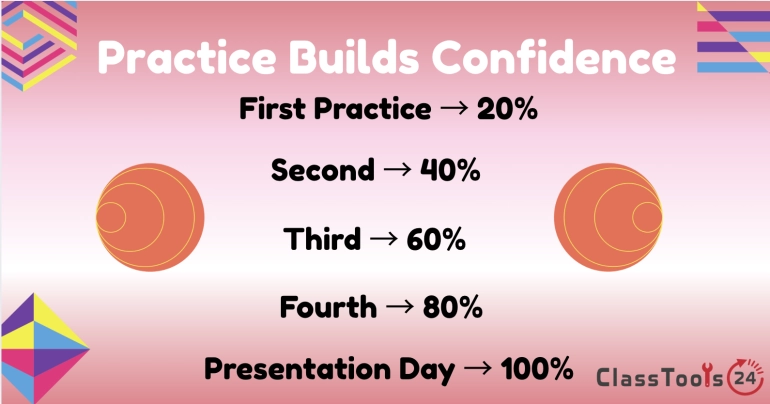
Reading silently is not enough. A presentation must be practised out loud because speaking uses different skills than reading. Students need to hear where they stumble, which words are hard to say, and whether the timing works.
Practise alone first. Then practise for one trusted person, such as a sibling, parent, friend, or classmate. If that feels too hard, record the presentation on a phone and listen back. Recording can feel awkward, but it helps students notice speed, volume, and unclear parts.
Practise the opening and closing especially well. A confident opening helps the student begin with more control. A clear closing prevents the presentation from ending with “That is all” in a rushed voice.
Control The First 30 Seconds
The first 30 seconds often feel the hardest. Students are adjusting to standing, speaking, and being watched. Prepare the first few lines carefully and practise them until they feel familiar.
A simple opening might be:
“Today I am going to explain how recycling helps reduce waste in our school. I will cover what recycling means, why it matters, and three ways students can help.”
This opening is not fancy, but it is clear. The audience knows the topic and structure. The student knows exactly how to begin.
Slow Down Your Speaking
Nervous students often speak too quickly. They want the presentation to end, so they rush. The audience may miss important points, and the student may run out of breath.
Use pauses on purpose. Pause after the opening. Pause between main points. Pause before an important example. A short pause can make the speaker sound more confident, even if they feel nervous inside.
A useful practice method is to mark pauses in notes with a slash:
“My first point is about sleep and memory. / When students sleep less, / it can become harder to remember what they studied.”
Use Slides As Support, Not As The Speech
Slides should help the audience understand, not carry the whole presentation. If slides are full of paragraphs, the audience reads instead of listens. The student may also end up reading directly from the screen.
Better slides use short headings, key words, images, diagrams, or examples. One slide should usually focus on one idea. Use large text and simple design.
For example, instead of putting a full paragraph about water pollution on a slide, use:
- Plastic waste harms rivers and oceans
- Animals may mistake plastic for food
- Reducing single-use plastic can help
The student can explain the details aloud.
Handle Shaky Hands And Nervous Body Language
Students often worry that everyone can see their nerves. In reality, classmates usually notice less than the speaker thinks. Still, simple habits can help.
Hold note cards with both hands if hands shake. Stand with feet flat on the floor. Avoid pacing unless movement is part of the presentation. Keep shoulders relaxed. Look at friendly faces or look slightly above the audience if direct eye contact feels too intense.
If using a pointer, pen, or paper becomes distracting, put it down. Nervous hands need something simple to do, not something that creates noise or movement.
What To Do If You Forget
Forgetting a word or sentence is not a disaster. Most audiences do not know what was supposed to come next. The student can pause, look at notes, and continue.
Useful recovery phrases include:
- “Let me say that another way.”
- “The next point is...”
- “What I mean is...”
- “I will return to that in a moment.”
- “To continue...”
Practising recovery phrases helps students feel less afraid of mistakes. A small pause feels much longer to the speaker than to the audience.
Use Breathing To Calm The Body
Before presenting, take slow breaths. Breathe in for four counts and out for four counts. Repeat a few times. This helps reduce the body’s stress response.
During the presentation, breathe at punctuation points. If a sentence ends, breathe. If a slide changes, breathe. If moving to the next point, breathe. Students who rush often forget to breathe properly, which makes the voice shake more.
Prepare For Questions
If the presentation includes questions, prepare for likely ones. Write three possible questions and short answers. Students do not need to know everything. They need to answer honestly and clearly.
If a student does not know an answer, it is better to say, “I am not sure, but I can find out,” than to invent information. Teachers usually respect honest thinking more than guessing.
Practise With A Smaller Audience First
If speaking in front of the whole class feels overwhelming, practise in smaller steps. Speak to yourself first. Then one person. Then two people. Then a small group. Confidence often grows through repeated safe practice.
Students can also practise by reading a paragraph aloud, answering a question in class, or explaining homework to a partner. These small speaking moments build skill before a formal presentation.
Presentation Day Checklist
- Check that slides or visual materials open correctly.
- Bring note cards or printed notes.
- Practise the first two sentences one more time.
- Take slow breaths before standing up.
- Speak slightly slower than feels natural.
- Pause between main points.
- Look at notes when needed.
- Finish with a clear closing sentence.
What Teachers And Classmates Actually Notice
Nervous students often imagine that everyone is judging every movement. Most classmates are thinking about their own presentations, the lesson, or what they need to do next. Teachers are usually looking for preparation, understanding, clear organization, and effort.
A presentation does not have to be perfect to be successful. If the student explains the topic, follows the structure, speaks clearly enough, and completes the task, that is progress.
Final Thought
Public speaking becomes less frightening when students have a plan. A clear message, simple structure, useful notes, out-loud practice, steady breathing, and recovery phrases can make a difficult presentation feel manageable.
Nervousness may not disappear completely, and that is okay. Confidence grows through doing the task, not avoiding it. Each presentation gives students another chance to learn what works, handle mistakes, and speak with a little more control than before.