Simple classroom decor ideas teachers can make with affordable supplies, reused materials, and practical classroom purpose.
A classroom does not need expensive decorations to feel warm, organized, and ready for learning. Many teachers have stood in an empty room in August, looked at blank walls, mismatched furniture, old bulletin boards, and a small personal budget, then wondered how to make the space feel inviting without spending too much.
The pressure can be real. Social media often shows classrooms with matching bins, printed labels, huge wall displays, layered borders, and picture-perfect reading corners. Those rooms can look beautiful, but most teachers are working with limited time, limited money, and supplies they already have in a cabinet. A good classroom does not have to look like a store display. It needs to help students feel safe, focused, and included.
Budget classroom decor works best when it has a purpose. A wall display should support learning or classroom routines. A reading corner should make books easier to choose. A student work board should celebrate effort. Labels should help students find materials independently. When decor helps the classroom run better, it becomes more than decoration.
These 15 DIY classroom decor ideas are designed for teachers who want a better-looking room without spending more than $50. Most ideas can be made with chart paper, paper bags, cardboard, tape, clothespins, string, reused containers, printed pages, or supplies already sitting in school storage. Choose a few that match your students, grade level, and classroom routines.
Before You Start: Spend Less By Planning First
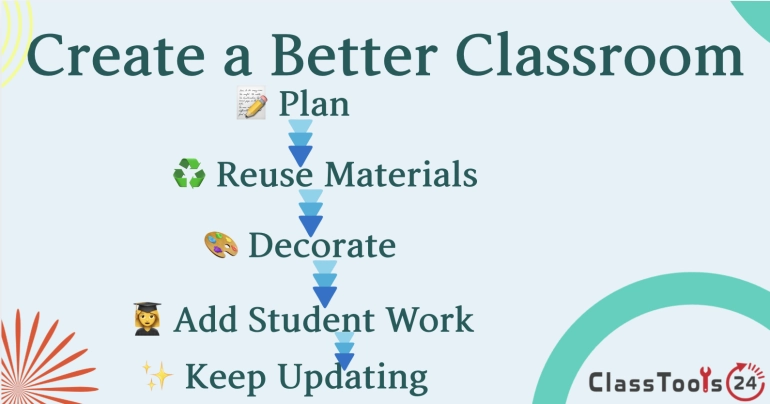
Before buying anything, walk around the classroom and make a short list of what the room actually needs. Does the room need a calmer entrance? A better way to display student work? A reading area? A birthday board? More labels? A stronger visual schedule? Planning first prevents impulse buying.
It also helps to choose two or three colors instead of trying to decorate every wall differently. A simple color plan makes reused materials look more intentional. For example, black and white with one bright accent color can make even basic paper signs look clean. Soft blue, green, and cream can create a calm feeling. Bright primary colors work well for younger grades.
Try to leave some wall space empty. Students need room for anchor charts, work samples, vocabulary, and changing displays. If every wall is full on the first day, there is no space for student ownership. A classroom should grow with the class.
1. Paper Chain Welcome Display
A paper chain is one of the cheapest ways to fill a wall or doorway with color. Use construction paper, copy paper, or leftover bulletin board scraps. Each student can write their name, a goal, a favorite book, or one thing they bring to the class on a strip of paper.
Link the strips together and hang the chain across a board, window, or doorway. This decor costs very little and immediately communicates that every student belongs. It also gives students a first-day activity that is simple, low pressure, and useful.
Estimated cost: $0 to $5 if paper is already available.
2. Clothespin Student Work Gallery
Instead of changing staples every time student work changes, make a clothespin gallery. Attach string, ribbon, or yarn across a bulletin board or wall space. Add clothespins so student work can be clipped and replaced quickly.
This works well for writing samples, drawings, exit tickets, project photos, reading responses, and certificates. It saves time and protects the wall. Students also enjoy seeing their work displayed in a way that feels special.
Estimated cost: $5 to $10 for clothespins and string.
3. Recycled Container Supply Station
Old jars, cans, plastic tubs, coffee containers, and small boxes can become a neat supply station. Cover them with paper, fabric scraps, or simple printed labels. Use them for pencils, markers, glue sticks, scissors, rulers, highlighters, and erasers.
The key is consistency. Even if the containers are different sizes, matching labels or paper wrapping can make them look organized. This decor also helps students find and return supplies without asking the teacher every time.
Estimated cost: $0 to $8 depending on labels and paper.
4. DIY Birthday Board
A birthday board does not need expensive cutouts. Create twelve simple cards, one for each month, and place student names under the correct month. Use envelopes, index cards, paper cupcakes, balloons, stars, or book shapes.
Keep the design simple so it can stay up all year. If you teach older students, use a more mature design such as monthly cards on a clipboard wall or a clean calendar-style display.
Estimated cost: $0 to $5.
5. Classroom Quote Wall With Student Choices
Instead of buying posters, let students help build a quote wall. Choose a few encouraging quotes about effort, mistakes, reading, kindness, or curiosity. Students can design quote cards by hand or on plain paper. Rotate them during the year.
This saves money and gives students ownership. It also avoids the problem of generic posters that students stop noticing after the first week. A student-made quote wall feels more personal.
Estimated cost: $0 to $5.
6. Cardboard Book Recommendation Display
Use cardboard from delivery boxes to make a book recommendation board. Cut rectangles or speech bubbles and cover them with paper. Students write short recommendations: title, author, and one sentence about why someone should read the book.
This decor supports reading culture. It gives students peer suggestions and makes the reading area feel active. You can refresh the display monthly without buying anything new.
Estimated cost: $0 to $4.
7. Paper Border From Scrap Paper
Bulletin board borders can add up quickly. Make your own by cutting scrap paper into strips, triangles, circles, or scallop shapes. Use one or two colors for a clean look. If you have leftover wrapping paper or old maps, those can also work as border material.
Handmade borders do not need to be perfect. A repeating pattern looks intentional even when materials are simple. This is a good project for students who finish work early and enjoy helping with classroom setup.
Estimated cost: $0.
8. Mini Anchor Chart Wall
Large anchor charts can take over a room. A mini anchor chart wall keeps important reminders in one area. Use half sheets of chart paper or regular paper to create small reference posters for classroom routines, writing steps, math strategies, reading skills, or discussion stems.
Keep the charts readable and uncluttered. Students are more likely to use a chart if it has a clear title, few words, and a simple example. This decor is useful because it supports independence.
Estimated cost: $0 to $6.
9. Calm Corner With Simple Materials
A calm corner does not need special furniture. A small chair, floor cushion, paper breathing cards, a feelings chart, and a small basket can create a quiet reset space. Use soft colors and clear expectations so students know the space is for calming down, not avoiding work.
Add a simple sign such as “Pause, Breathe, Return.” Include a few cards with strategies: count to ten, take three breaths, stretch hands, write a feeling, or ask for help. This supports classroom behavior and emotional regulation.
Estimated cost: $0 to $15 if you already have a chair or cushion.
10. Door Greeting Sign
A door greeting sign can make the entrance feel welcoming. Create a simple poster with options such as wave, smile, fist bump, high-five, or verbal greeting. Students can choose how they want to be greeted.
This small routine can help younger students transition into the room. It also gives the teacher a quick moment to notice student mood before the day begins.
Estimated cost: $0 to $3.
11. Student Name Banner
Make a banner with one card for each student. Each card can include the student name and a small symbol, color, or pattern they choose. Hang the banner above a board or along a wall.
A name banner is useful at the start of the year because it helps students learn each other’s names. It also sends the message that the room belongs to the class, not just the teacher.
Estimated cost: $0 to $6.
12. Subject Corner Signs
If your classroom has different areas for reading, writing, math, science, supplies, or projects, make simple signs for each zone. Use consistent fonts, paper, or borders so the room feels organized.
Clear signs reduce repeated questions. Students can find materials, turn in work, choose books, or locate group supplies more easily. This is especially helpful for younger students and new students.
Estimated cost: $0 to $5.
13. DIY Classroom Jobs Board
Classroom jobs help students take responsibility, but the display does not need to be fancy. Use library pockets, envelopes, sticky notes, clothespins, or magnets. Write job names such as line leader, paper helper, board cleaner, technology helper, plant monitor, and supply checker.
Keep the number of jobs manageable. A jobs board works better when every role is real. If a job does not need doing, remove it instead of assigning pretend responsibility.
Estimated cost: $0 to $8.
14. Growth Mindset Mistake Board
Create a small board that normalizes mistakes. Use headings such as “Mistakes Help Us Learn” or “Try, Check, Fix.” Add examples of common mistakes and corrections. Students can also contribute anonymous examples of something they learned from a mistake.
This is practical decor because it supports classroom culture. Students who fear being wrong often avoid trying. A mistake board reminds them that revision is part of learning.
Estimated cost: $0 to $5.
15. Fabric Or Paper Backdrop For One Focus Area
If the room feels visually messy, choose one focus area to improve instead of decorating everything. Cover one board or wall space with fabric, wrapping paper, kraft paper, or a clean paper background. Use it for student work, reading goals, or weekly focus.
One polished area can make the whole classroom feel more intentional. It is better to have one useful, neat display than six unfinished ones.
Estimated cost: $5 to $15.
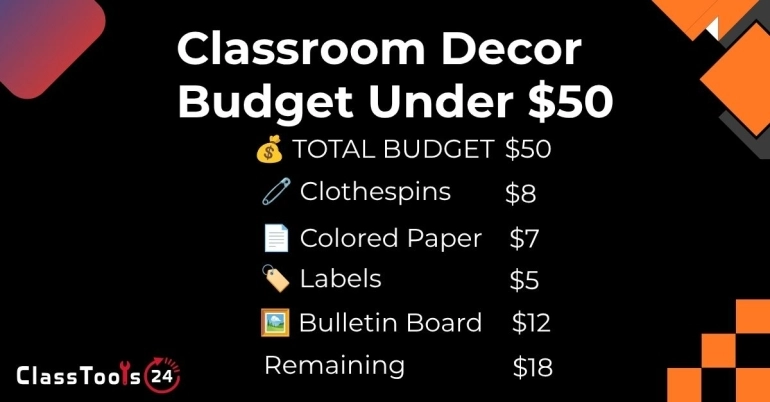
A Sample Under-$50 Classroom Decor Budget
| Item | Estimated Cost | Purpose |
|---|---|---|
| Clothespins and string | $8 | Student work gallery |
| Colored paper | $7 | Name banner, labels, borders |
| Sticky notes or index cards | $5 | Book recommendations and exit displays |
| Simple fabric or kraft paper | $12 | Focus bulletin board |
| Label tape or printable labels | $5 | Supply station |
| Small basket | $6 | Calm corner or materials |
| Extra tape | $4 | Hanging displays |
Total estimated cost: $47. Many teachers can spend even less by reusing supplies, asking families for clean containers, using school paper, or swapping materials with colleagues.
What To Avoid When Decorating On A Budget
Avoid buying decor before knowing the purpose. A cute poster may look good, but if it does not help students learn, organize, or feel included, it may not be worth the money. Budget classrooms work best when every item earns its place.
Avoid filling every wall. Too much visual information can overwhelm students, especially younger learners or students who struggle with attention. Keep important charts clear and leave blank space for the eye to rest.
Avoid making everything yourself if it adds stress. Student-made decor is often more meaningful and less expensive. Let students create labels, book cards, goal leaves, kindness notes, or quote cards. The room will look more like a learning community.
How To Make DIY Decor Look Professional
Use repetition. Repeated colors, shapes, labels, or borders make simple materials look planned. A set of handwritten labels can look neat if the same marker, size, and shape are used throughout the room.
Use clear spacing. Crooked displays and crowded boards can make a room feel messy even when the materials are nice. Leave margins around signs and student work. Line up edges where possible.
Use fewer words. Classroom signs should be readable from a distance. A short heading, simple icon, and clear label are usually enough. Students should be able to understand the display quickly.
Final Thought
Classroom decor does not have to be expensive to be effective. A welcoming room is built through clear routines, student ownership, useful displays, and small details that help students feel that they belong.
With less than $50, teachers can create a student work gallery, organized supply station, name banner, calm corner, reading recommendation board, and useful learning displays. The best decor is not the most expensive. It is the decor that helps students learn, find what they need, and feel comfortable enough to participate.
 This article is about
Free School Certificate Maker
Open the tool
This article is about
Free School Certificate Maker
Open the tool